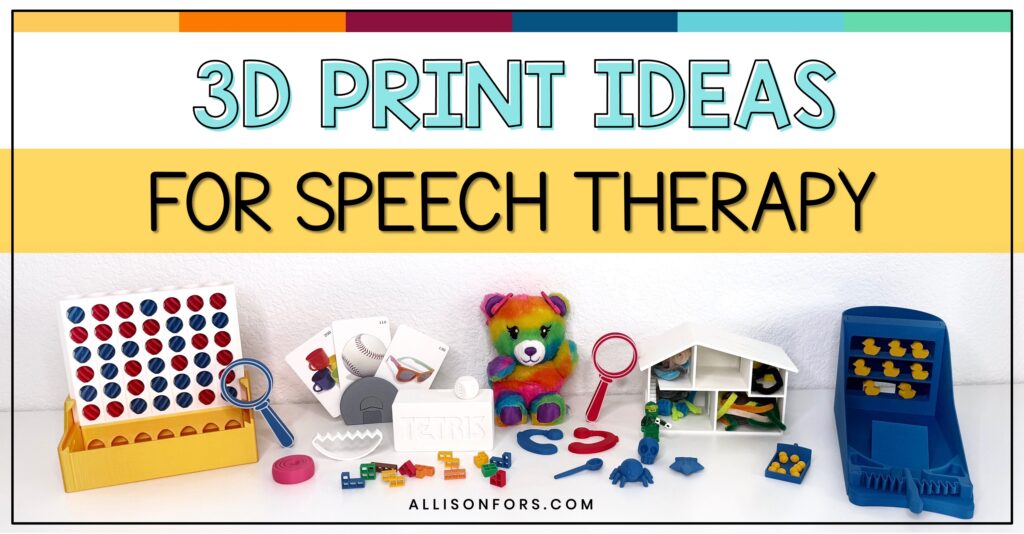
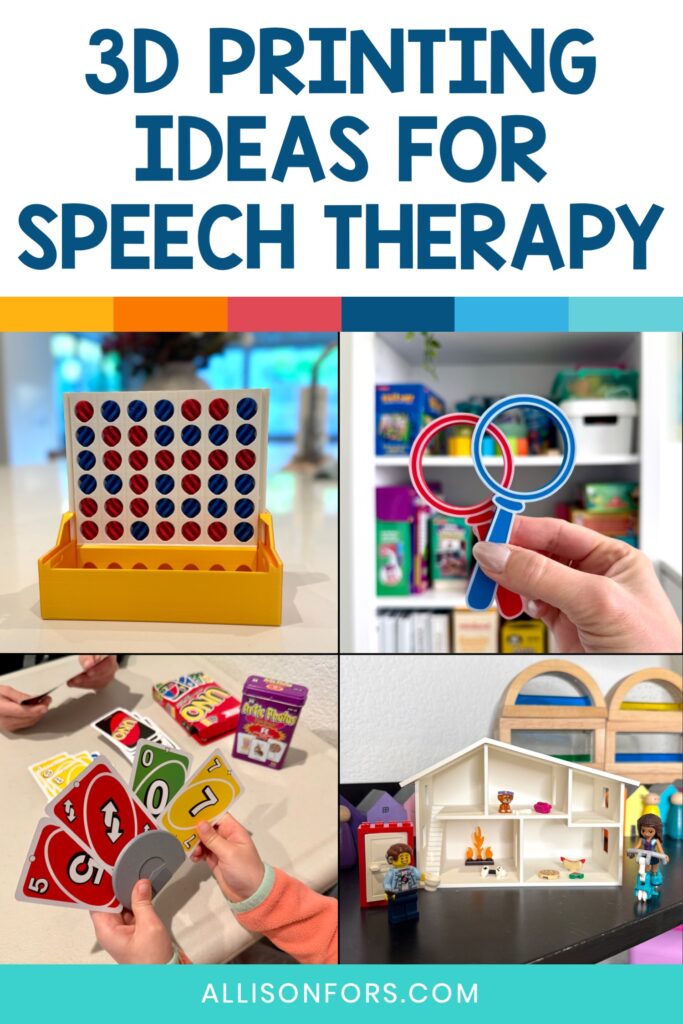
Speech therapy 3D print ideas! I’ve made everything from anatomy models and articulation mini objects to a card holder for tiny hands, a mini dollhouse, and much more.
When I started sharing these prints on social media, I honestly didn’t expect the response and people asking where to find the files! So I’m putting it all in one place: what I made, why it’s useful in therapy or the classroom, and links to the templates so you can print your own. (By the way, if you saw a 3D print on social media that isn’t listed or linked here, it is because the template is no longer listed or I don’t recommend the print.)
A quick note on my setup: I have the Bambu Lab P1S printer and have printed everything using free templates in the Bambu Handy app. I bought mine about a year ago during the Cyber Monday sale, so there are almost certainly newer models out by now. You don’t need this exact printer to make any of these.
One of the best parts of working with these templates is how customizable they are. Most can be resized up or down, and depending on the file, you can often add text, adjust the font, or change up the color scheme. Before you commit to printing something, scroll through the reviews or comments on the template page first. Other makers often share sizing tips, tweaks, or fixes for common print issues, and that can save you a failed print or two.
If you’ve never touched a 3D printer, here’s the short version of what’s helpful to know before you work through this list. If you don’t have a printer at home or work, some public libraries have them available for use.
Most home printers use a spool of plastic filament that melts and builds your object layer by layer until it’s complete. The most common filament for beginners is PLA. It’s affordable and comes in a wide range of colors. It isn’t officially food-safe or toy-certified in most cases, so keep that in mind for anything little ones will mouth or chew, and supervise use with small pieces the same way you would with any tiny manipulative already in your therapy bag.
You’ll find free and paid templates on sites like MakerWorld, Printables, and Thingiverse. Each file needs to run through slicing software before printing; the program translates the 3D model into instructions your printer can follow, and you can resize a file, assign multiple colors (if your printer supports it), or make small tweaks. Print times vary a lot depending on size and detail. A simple fidget might take under an hour, while a detailed articulated toy or a multi-piece game can run several hours or overnight.
Cost is one of the best parts. Filament typically runs just a few cents to a few dollars per item, which is part of why this has become such an affordable way to create materials.
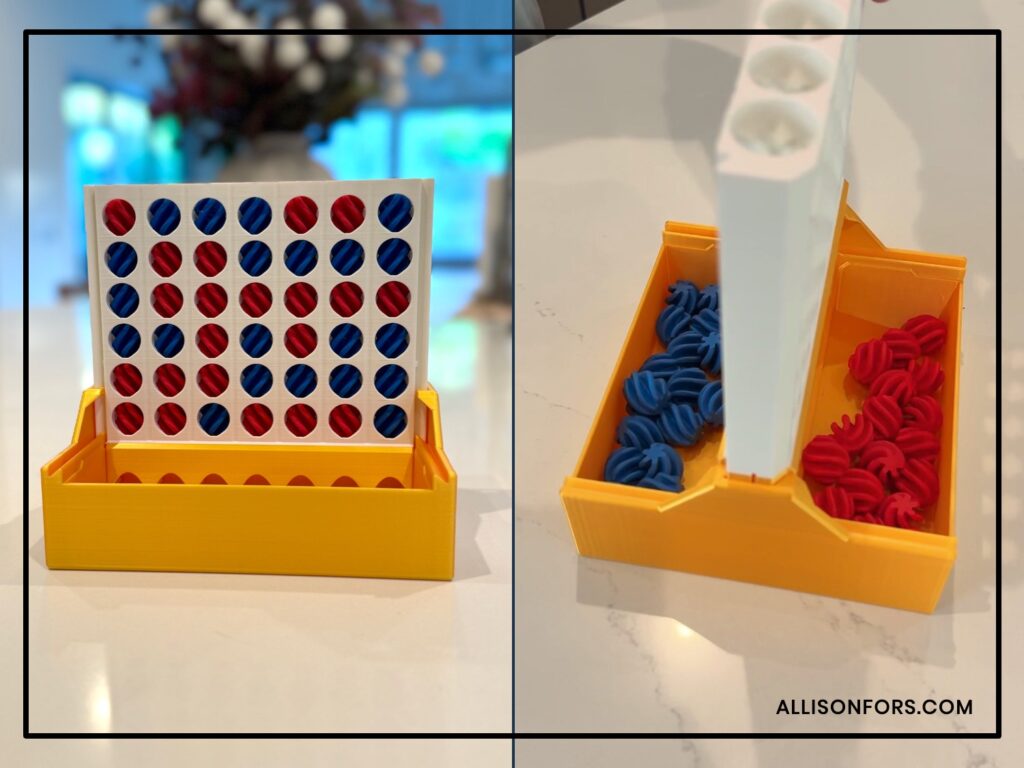
My personal favorite is a self-sorting Connect 4 game. This one gets the biggest reaction. The trick is in the threading: the thread is cut in opposite directions on the red vs blue balls, so when you release them, they sort separately into different sides. Honestly, it’s a smarter design than the original!
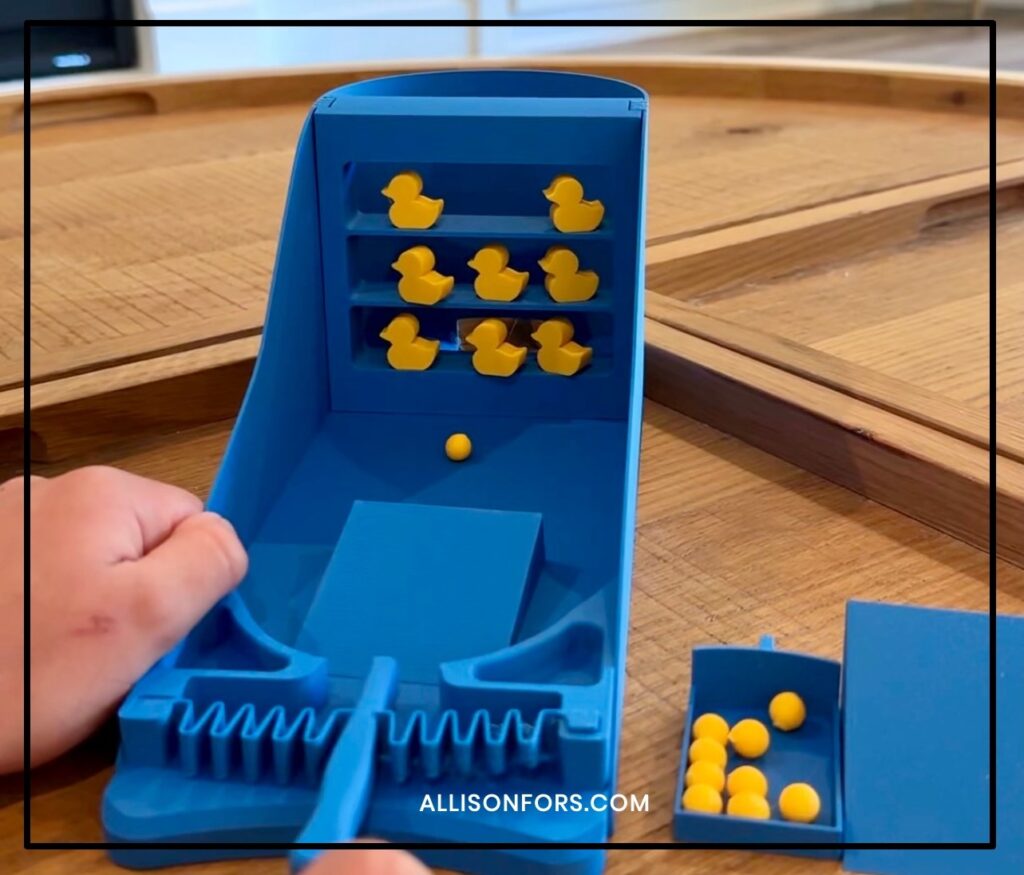
I love this fun duck carnival game. Think a tiny, tabletop-scale version of the classic carnival duck pond. It’s great for racking up high trial counts in articulation therapy, since the setup naturally lends itself to quick, repeated turns. Fair warning: it has quite a few small pieces, so I’d save this one for older students or anyone who can handle a longer, seated activity.
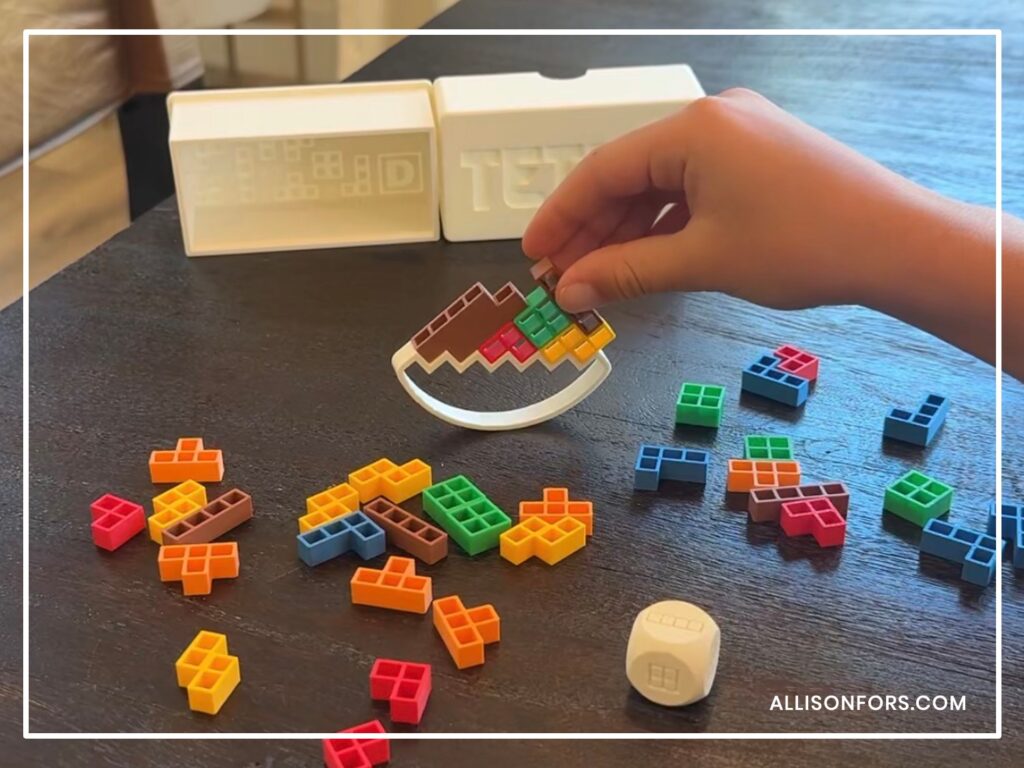
I also printed a mini Tetris balance game. These have become very popular recently, and I’ve seen jumbo versions at Costco. Players roll a die, find the matching piece, and balance it on the growing stack without toppling it over. It’s another solid option for quick, high-trial practice, and because it takes real fine motor control to place pieces without knocking the tower down, I’d reach for this one with older kids rather than your youngest caseload.
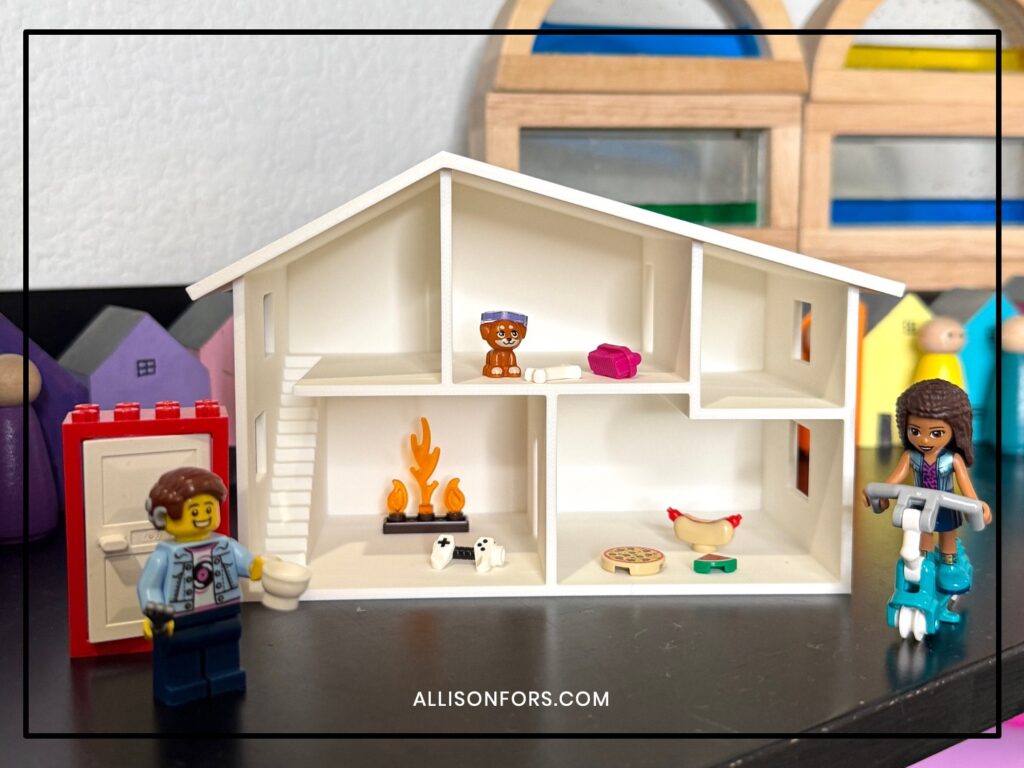
This mini dollhouse was one of the most fun builds on this whole list. It’s perfectly sized for LEGO minifigures and accessories, making it an easy way to bring imaginative, narrative-rich play into a session without buying an entire new toy line. Like most of these templates, it’s fully customizable, so you can resize it up or down depending on what you want.
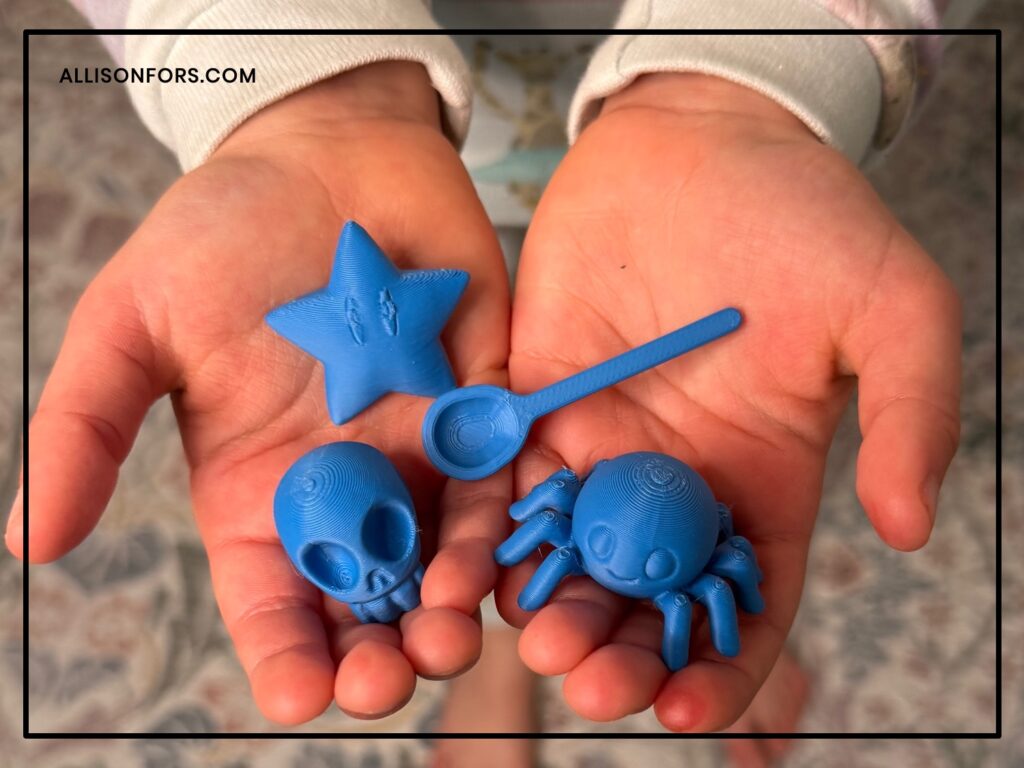
I was genuinely excited to put my printer to work on articulation mini objects. If you’ve ever hunted for enough tiny target objects for something specific like /s/ blends, you know exactly how hard that search can be. Being able to print exactly the sounds I need, in the quantity I need, has made building out targeted artic kits so much easier.
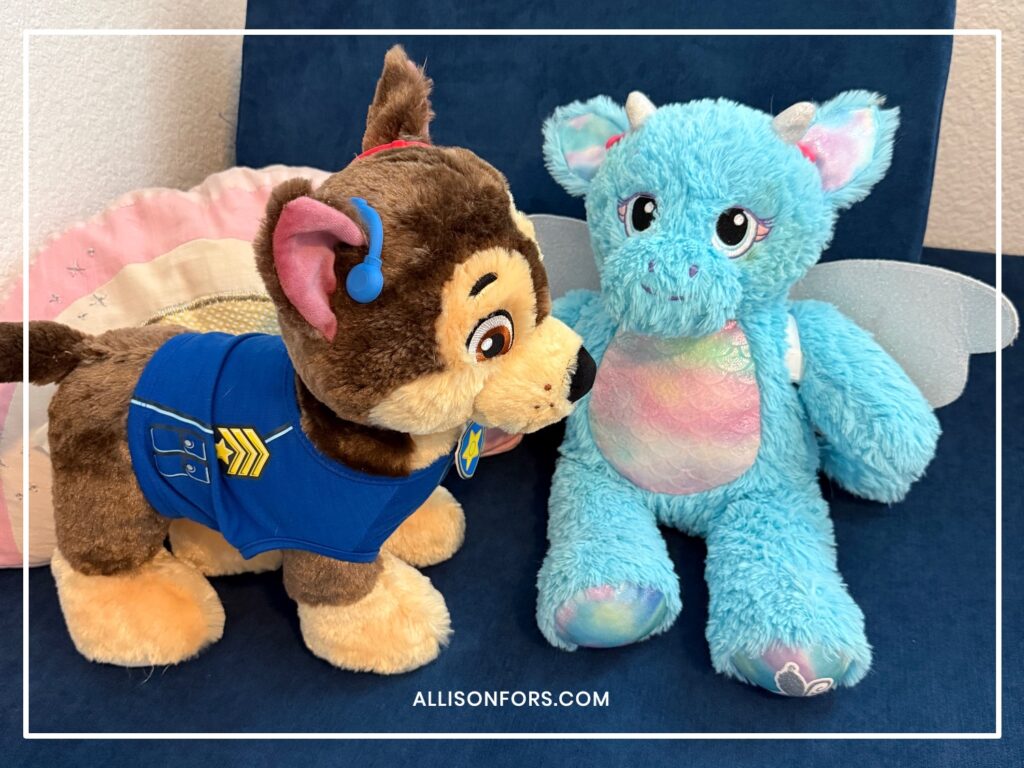
This one is personal: hearing aids for stuffed animals. My daughter wears bilateral hearing aids, so when I came across this template, I knew I had to print a set. I think these make a wonderful, quiet addition to a therapy room or classroom shelf, especially if you have deaf or hard-of-hearing students on your caseload. Representation like this matters more than people realize, and it’s a small way to make a room feel a little more familiar for a kid who wears hearing technology every day.
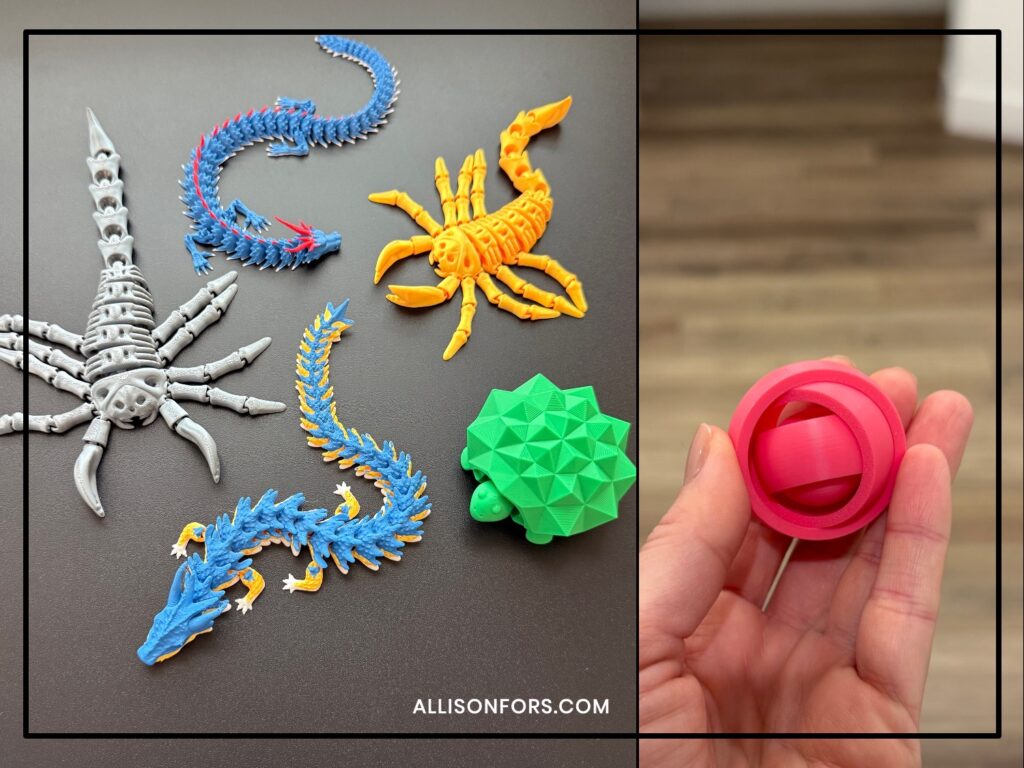
You’ve probably seen articulated 3D printed toys all over your feed by now. These flexible, poseable figures were some of the first 3D-printed items I remember going viral, and they’re everywhere for good reason. They’re satisfying to fidget with, which makes them a nice option for keeping hands busy during a session, and there’s no shortage of fidget-specific templates out there too if sensory regulation is something you’re also targeting.
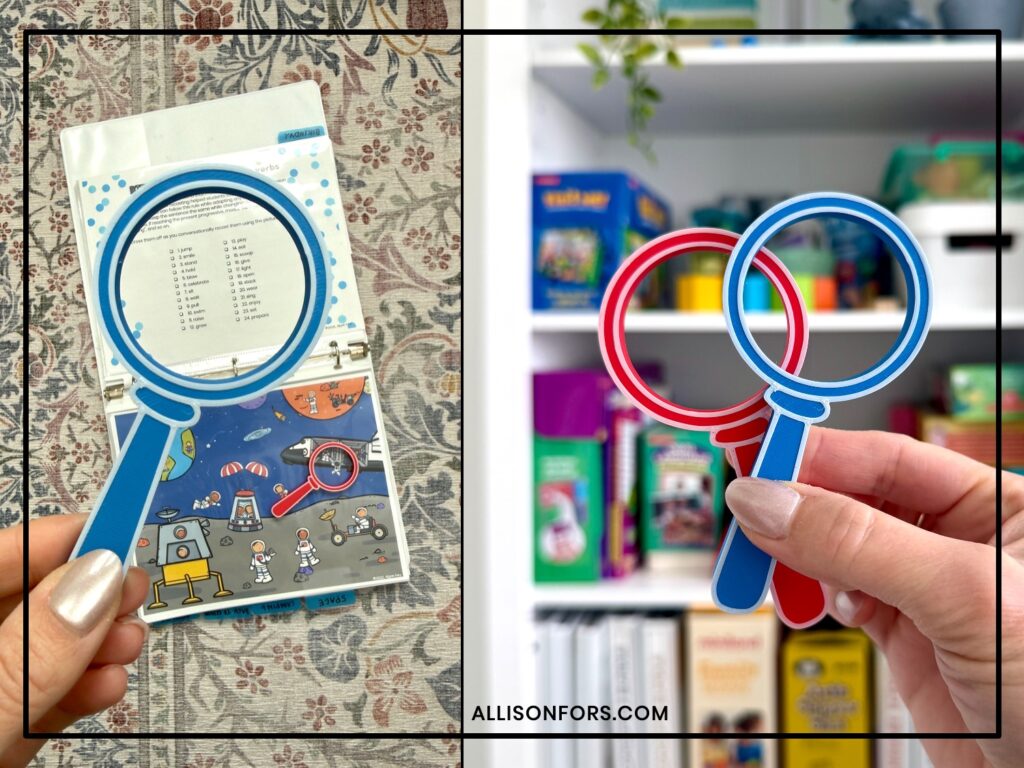
Magnifying glasses! I have bought quite the collection of magnifying glasses for therapy – large, small, some with actual magnifying lenses and some that are just fun handles for pretend play. They’ve become one of my go-to props for finding target words hidden in a busy scene, or just getting a student talking about what they notice in a picture. I use them constantly alongside my language picture scene resources, handing a student a magnifying glass to “search” the scene adds a layer of engagement a plain worksheet just can’t match, and it works for articulation carrier phrases just as well as it does for language and vocabulary goals.
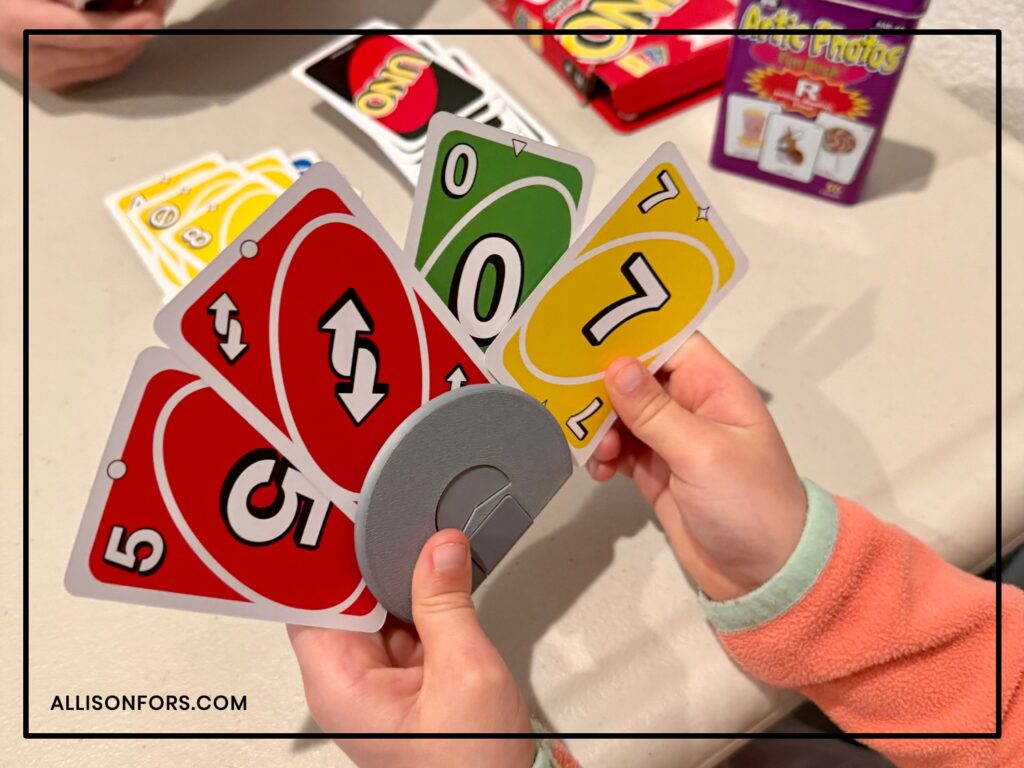
And then there’s this card holder. Genuinely one of the smartest little prints on this whole list. It’s designed for tiny hands, or for any student who needs extra support with fine motor control or muscle grading, and it holds a hand of cards upright so they’re not fighting gravity and their fingers at the same time just to play. If you’ve ever watched a student get frustrated trying to hold cards during a game-based session, you already know how much difference a tool like this makes.
If you print any of these, I’d love to see them, tag me or send me a photo. I’m sure this list will keep growing as I find (and design) more ideas, so bookmark this post if you want to come back for updates.
Do you have a 3D printer? What have you made? Leave a comment below!

One Response
Some really creative ideas here! I liked how the 3D-printed tools can turn regular speech practice into something more interesting for children. At Rainbows Speech and Hearing Clinic, we also use practical approaches during Speech Therapy and Audiology Services in Mancherial to make sessions more comfortable for children.