
Grammar games in speech therapy: How to use games to target complex sentences with your middle school and high schoolers!
For many of the students we work with, those with developmental language disorder, hearing loss, or complex communication needs, syntax and morphology are persistent areas of difficulty. And the impact goes beyond the therapy room. Struggles with grammar show up in conversation, in the classroom, and in writing. As clinicians, our job is to build flexible, functional language skills that help students communicate clearly across all of those contexts.
In upper elementary and middle school, many students need explicit support with advanced syntax: subordinating conjunctions, relative clauses, passive voice, and sentence embedding. But let’s be honest, drilling sentence frames gets old fast, especially with older kids who have been in therapy for years. Games change the dynamic. They increase engagement and give students a reason to produce language without the session feeling like a worksheet.
Here are some favorite games to target complex sentences with older students.
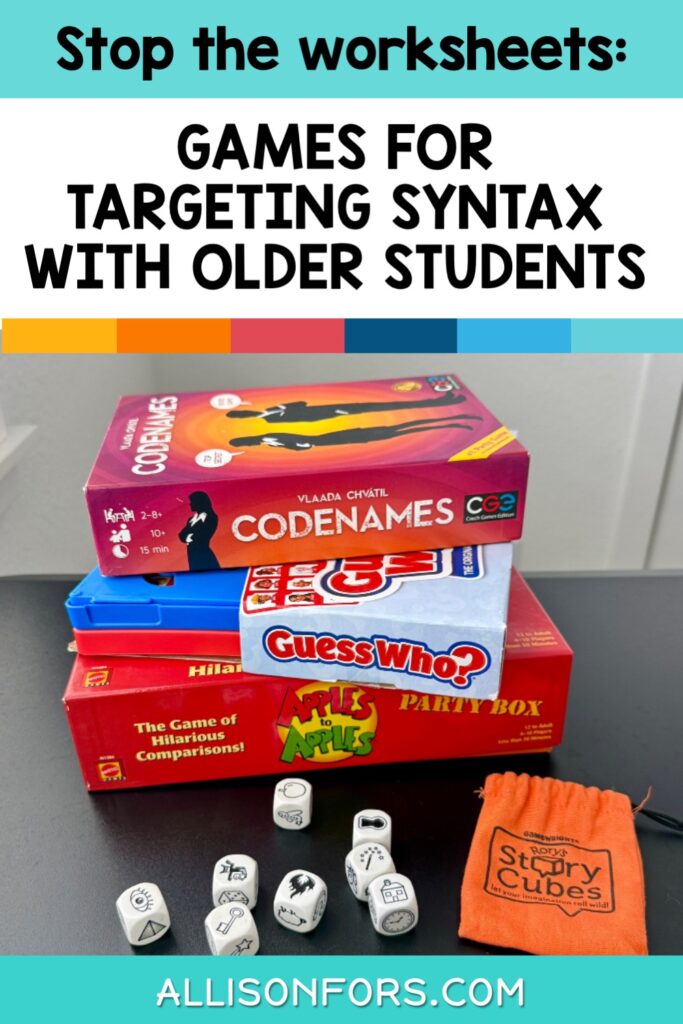
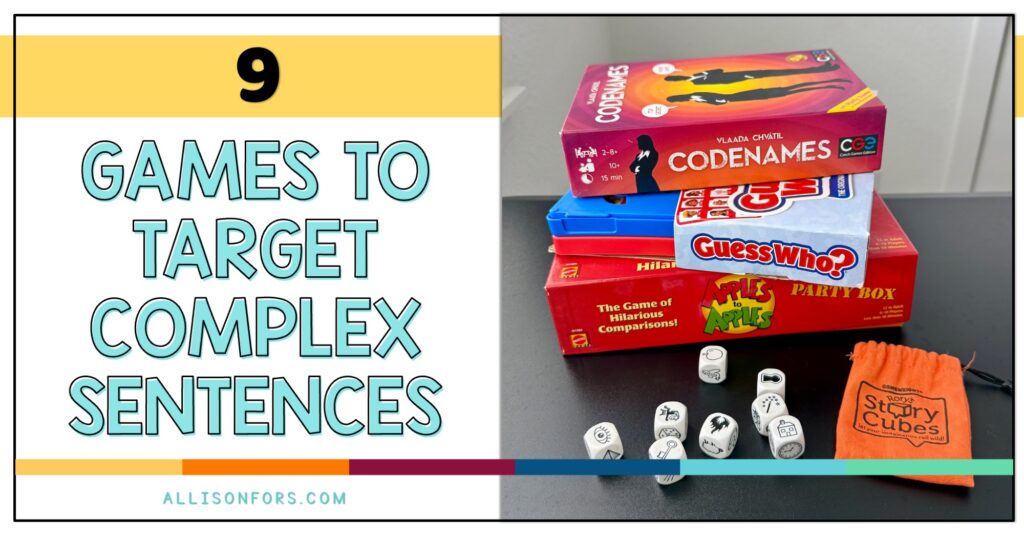
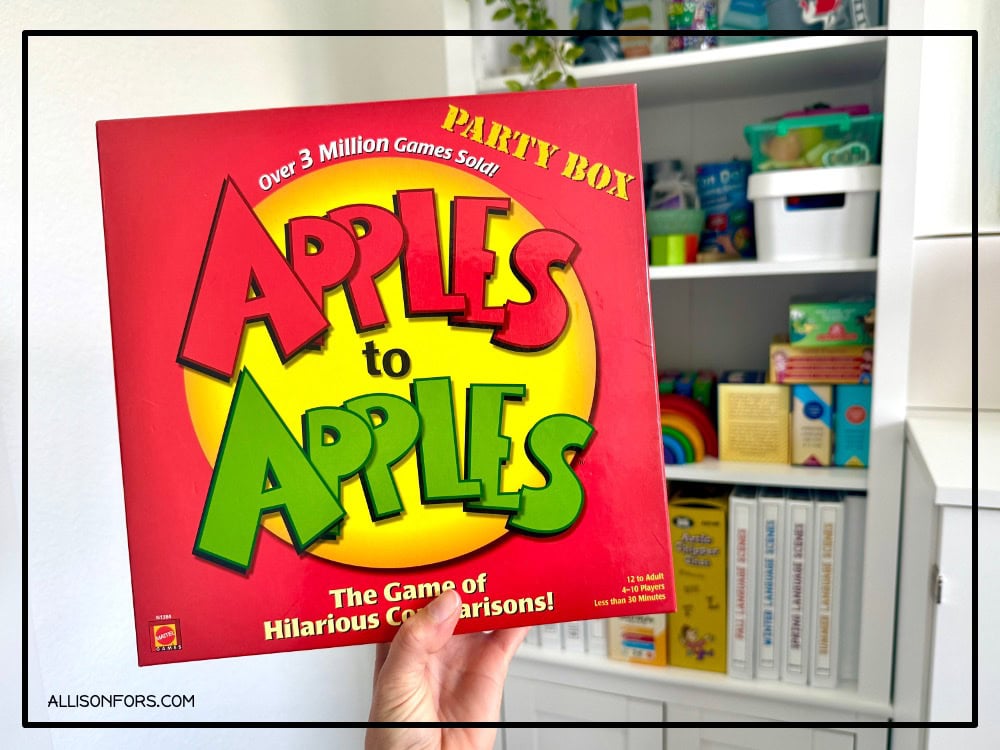
Apples to Apples Junior or Apples to Apples
This classic card game is a natural fit for complex sentence targets. After a student plays their card, require them to justify their choice using a subordinating conjunction: “I chose ‘dogs’ because they are loyal, which makes them the most [adjective].” It’s low-pressure, fast-moving, and works well in groups.
20 Questions
This simple game becomes a syntax target when you require full, grammatically complex questions: “Is it something that is used primarily indoors?” or “Would it still be useful if electricity didn’t exist?” Model and expand as needed.
Codenames requires players to connect words conceptually and explain their reasoning. Prompt students to give clues or explain guesses using relative clauses or causal language: “The word I was thinking of is the one that connects to both water and survival.” It stretches both vocabulary and syntax at once.
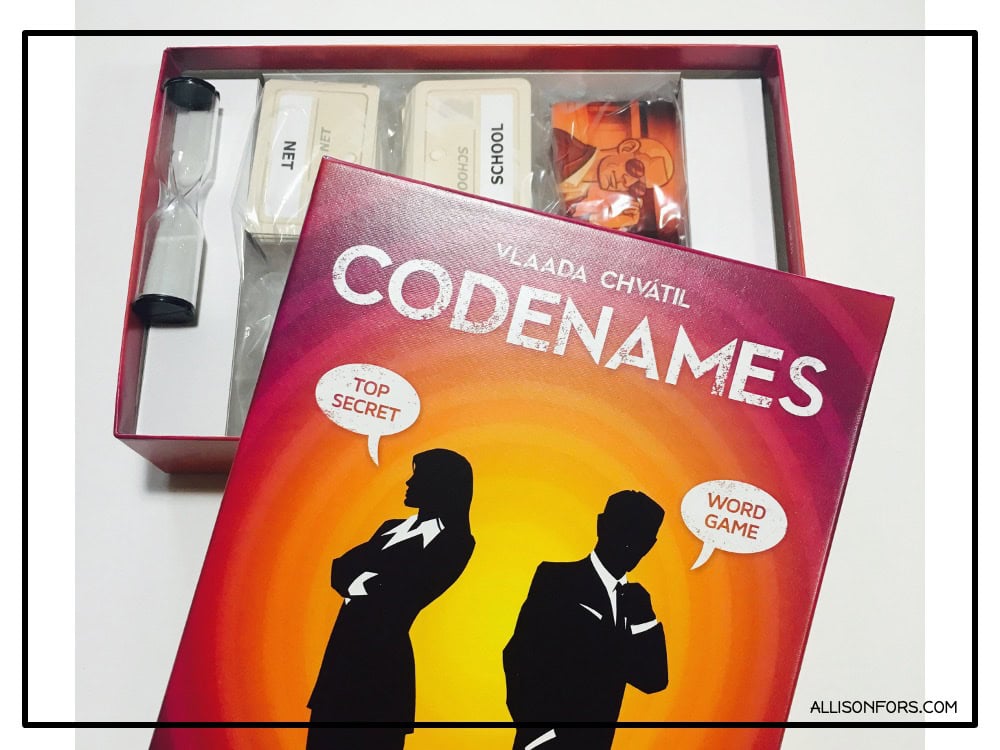
Describing a word without using its most obvious descriptors forces students to use circumlocution and complex phrasing naturally. Target relative clauses (“It’s something that you use when…”) or subordinate clauses (“Although it looks like…, it’s actually…”).
Two Truths and a Lie
Students write or say three statements, two true and one false. Require each statement to be a complex sentence. Peers must identify the lie using evidence-based reasoning—another built-in language target.
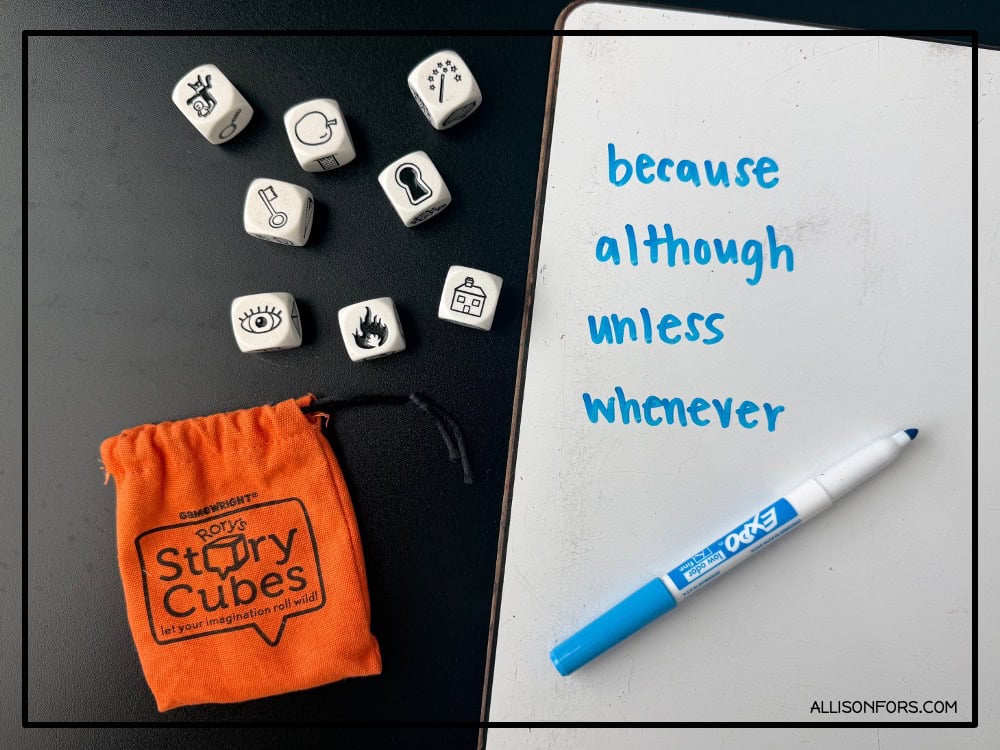
Storytelling Dice (like Rory’s Story Cubes)
Story dice make a perfect grammar game. Roll the dice, build a story. Set a rule that each sentence must contain a conjunction (because, although, unless, whenever) or embed a relative clause. These dice are inexpensive, portable, and easy to differentiate by complexity level. There are fun theme options for Rory’s Story Cube dice!
The abstract, imaginative imagery in Dixit cards is ideal for eliciting complex descriptions. Students must describe a card so others can identify it without making it too obvious. Encourage elaborated noun phrases and embedded clauses to earn points.
What Do You Meme? Family Edition
Memes require students to interpret figurative meaning and then construct captions or explain why something is funny. Target passive voice, conditional sentences, and adverbial clauses: “This meme is funny because, even though…”
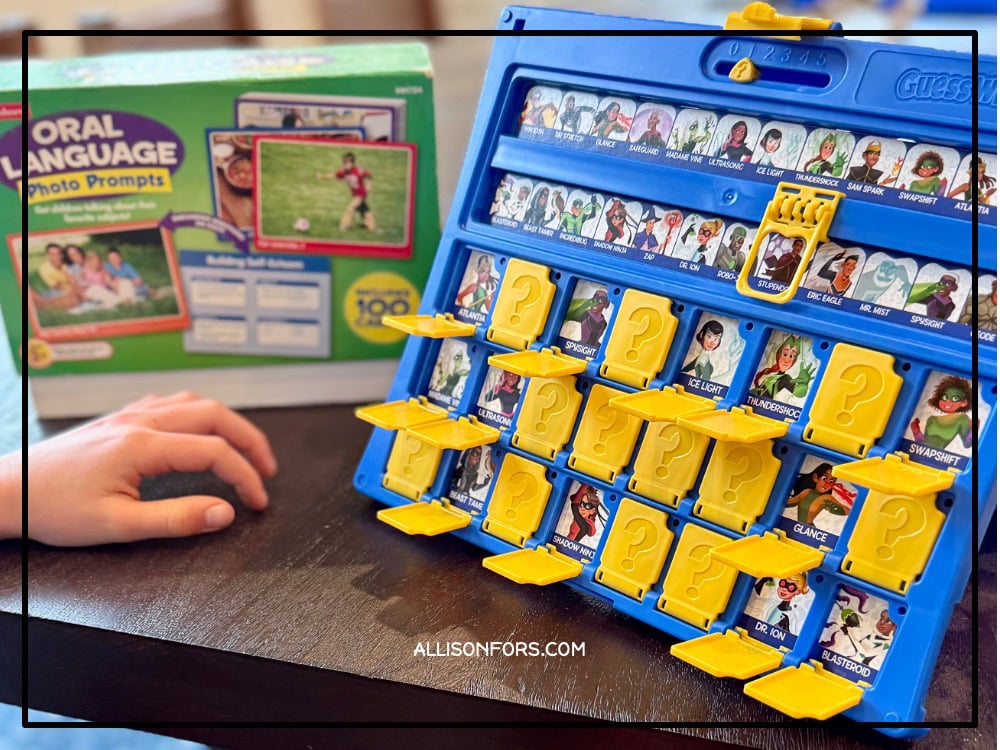
Modify the classic game to target relative clauses: Instead of saying “Does your person have…”
Ask: “Is your person someone who wears glasses?” or “Is your person someone whose hat is blue?” Write some sentence frames down for your student to use and model.
These games that we can turn into “grammar games” aren’t magic. They work best when you’ve pre-planned your specific targets, modeled the structures, and built in explicit feedback loops. But used intentionally, they give older students a reason to produce language and a context that feels less clinical.
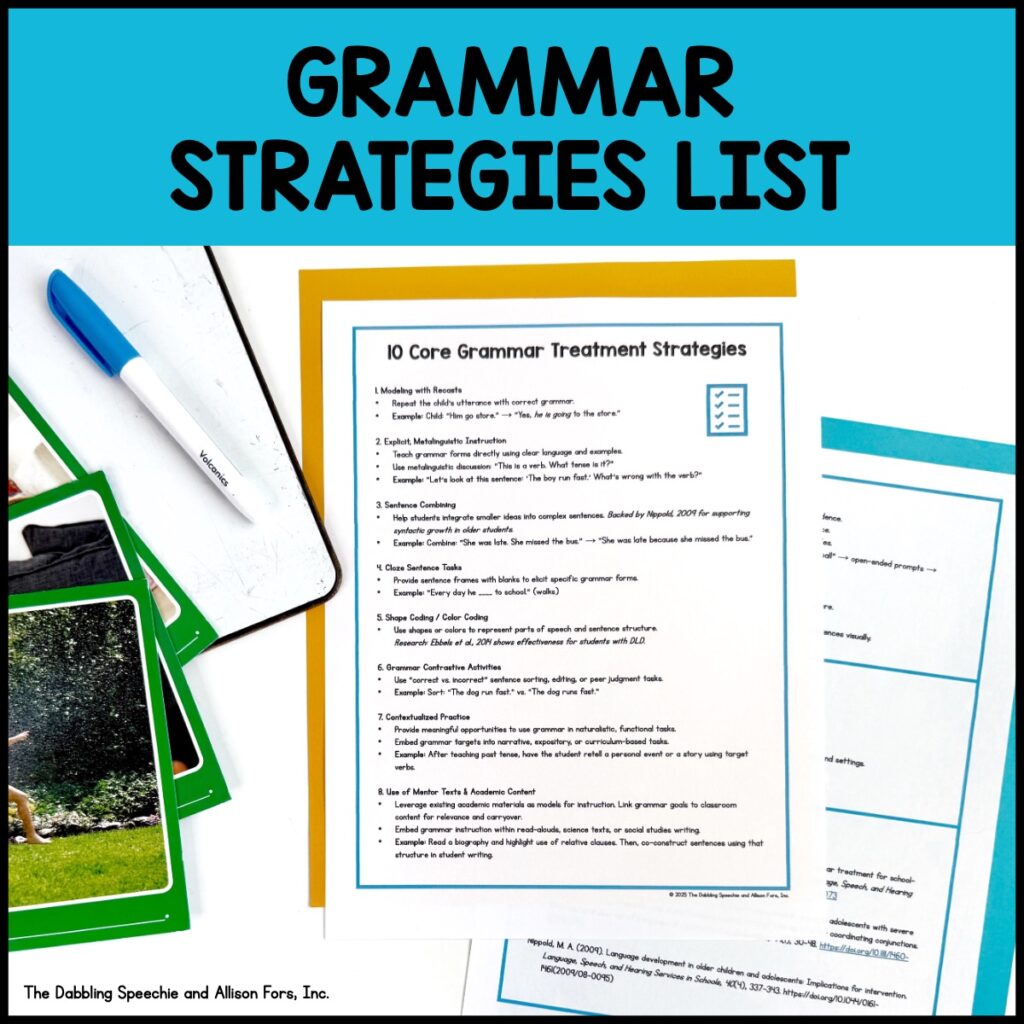
If you want ideas on effective strategies to implement while using these games, grab this free two-page list of 10 grammar strategies. Each strategy is paired with practical examples you can use right away. These strategies work well for learners from preschool through high school. They can easily be incorporated into therapy sessions, literacy activities, or classroom collaboration.
Do you have any fun games you use when targeting syntax and grammar? Comment below with more games you can turn into grammar games!
You might be interested in reading:

If you enjoyed this post, please share it!
We are a participant in the Amazon Services LLC Associates Program, an affiliate advertising program designed to provide a means for sites to earn advertising fees by advertising and linking to Amazon.com. All opinions are my own.