
Understanding the difference between voiced and voiceless consonants is a key part of helping students master clear articulation. For some students, understanding voicing helps them feel, hear, and control how sounds are made.
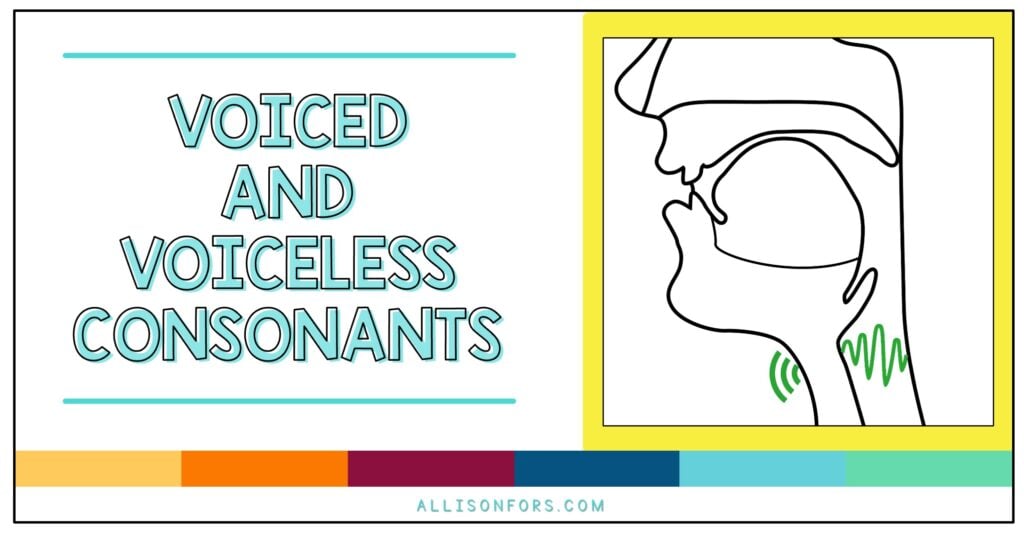
Every speech sound we make involves air moving through our vocal tract, but not all sounds are made the same way. One key difference between consonants is voicing. Voicing refers to whether your vocal folds (vocal cords) vibrate when you produce a sound.
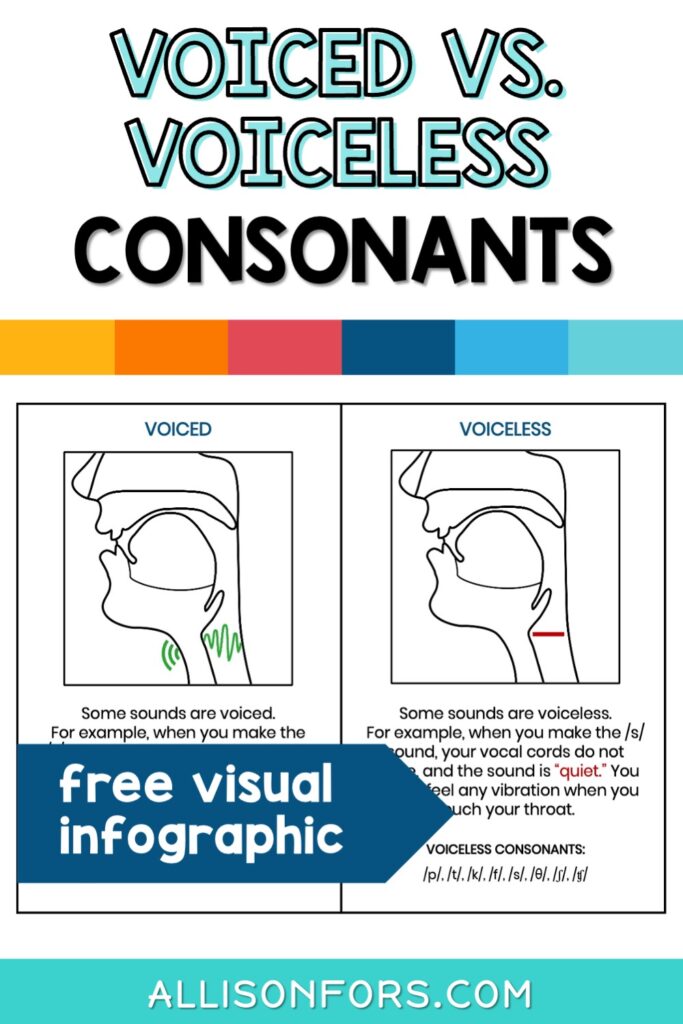
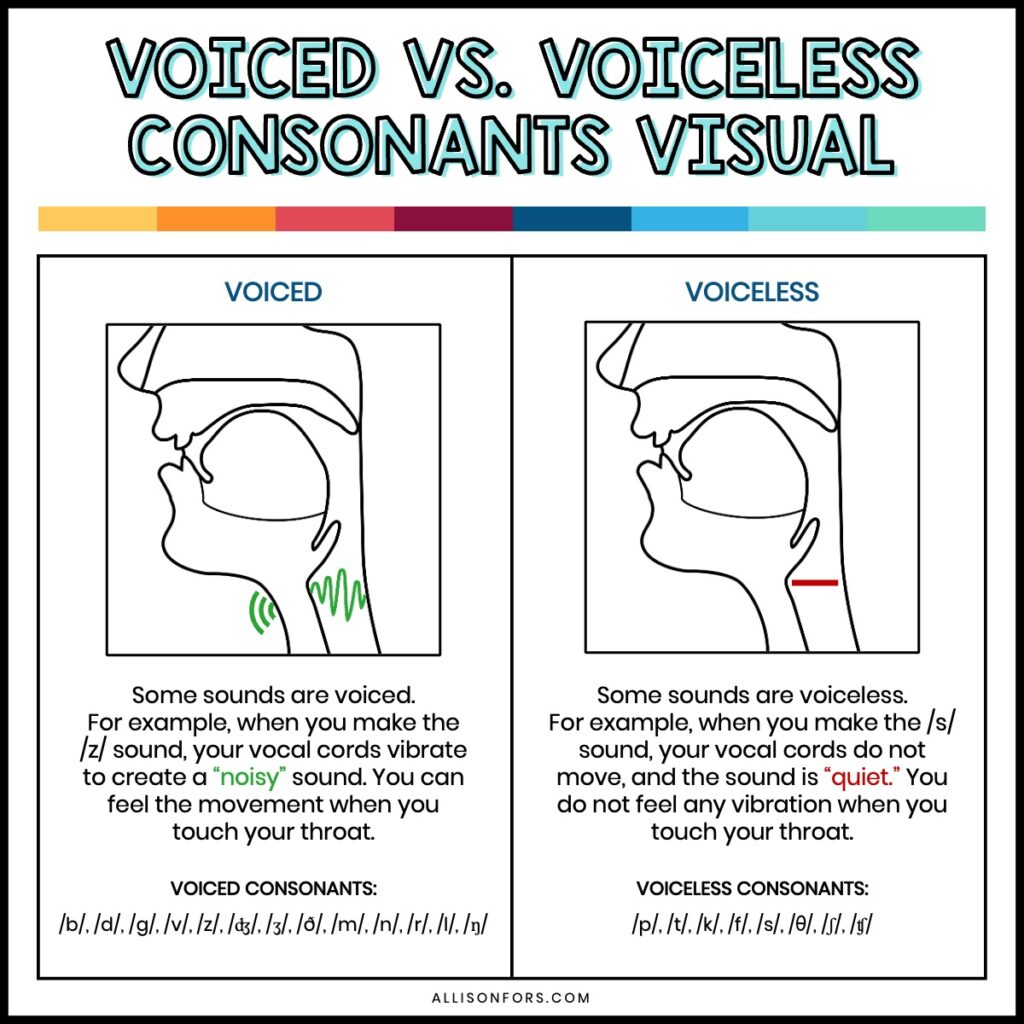
Voiced sounds happen when the vocal folds vibrate. You can feel this by placing your fingers lightly on your throat and saying sounds like /b/, /d/, or /g/. You’ll notice a gentle buzz or vibration.
Voiced consonants: /b/, /d/, /g/, /v/, /z/, /ʤ/, /ʒ/, /ð/, /m/, /n/, /r/, /l/, /ŋ/
Voiceless sounds are made when the vocal folds stay open and air flows freely, without vibration. When producing /p/, /t/, or /k/, you’ll feel air move out, but there should be no buzzing in your throat.
Voiceless consonants: /p/, /t/, /k/, /f/, /s/, /θ/, /ʃ/, /ʧ/
Many consonants come in voiced and voiceless pairs, made with the same mouth position but differing only by voicing. For example:
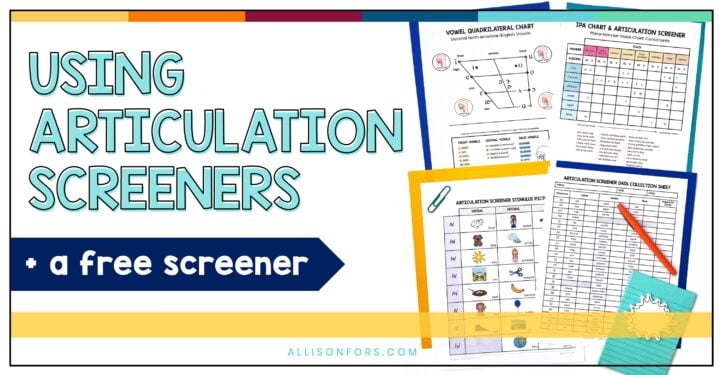
If you are in need of a great IPA chart to remember voiced vs voiceless consonant pairs, I have a free one! It is a great reference guide for place, manner, and voice of consonant sounds.

Understanding voicing can be especially helpful for students who:
Teaching about voiced vs. voiceless sounds gives students a concrete way to understand what’s happening inside their mouth and throat. This awareness often leads to faster progress because they can begin to self-monitor and feel the difference instead of just trying to “copy” a sound.
Start with a simple, multisensory explanation:
You can also use mirrors, voice apps that show sound waves, or straws and tissue paper to visualize air flow and vibration.
Use this visual to help your students understand the difference between voiced and unvoiced consonants. It is included in the Free Speech Therapy Handouts PDF. You can download it for your use.
Teaching voicing isn’t just about motor skills. It’s about building sound awareness. Once students understand the difference between voiced and voiceless sounds, they gain more control over their articulators and can better correct speech sound errors. Additionally, this concept aligns perfectly with early literacy skills, since understanding how sounds differ enhances phonemic awareness and spelling.
Let me know what you think of these freebies when you leave feedback! I love to hear from you!
You may also be interested in: