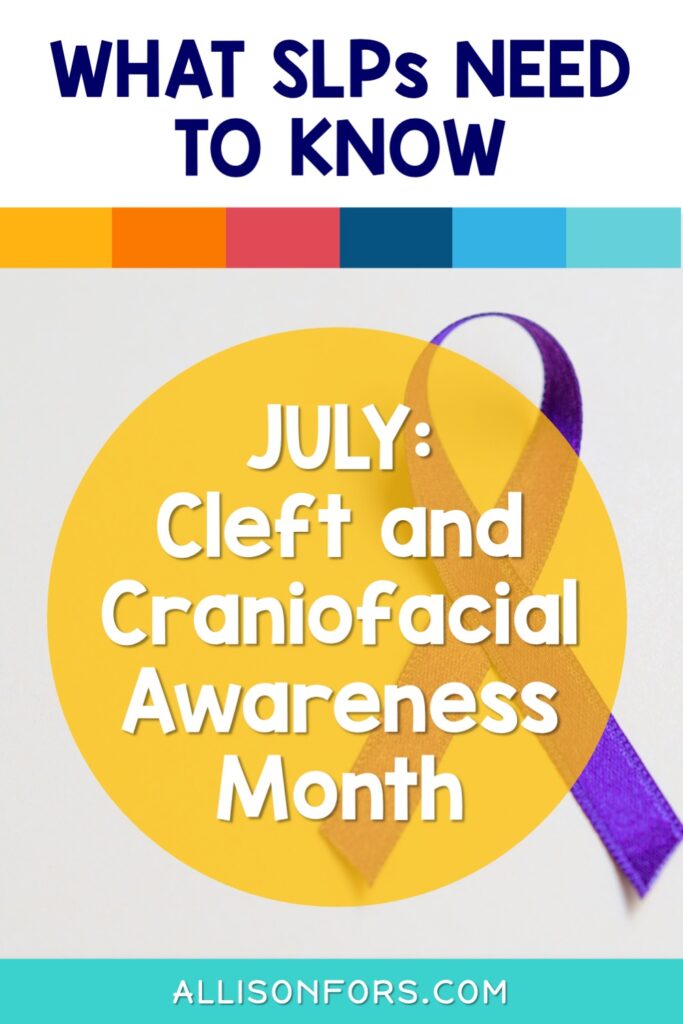
July is recognized as Cleft and Craniofacial Awareness Month, a time to raise visibility about the needs, strengths, and multidisciplinary care of individuals born with cleft lip and/or palate and other craniofacial differences. As SLPs and SLPAs, we play a vital role in their care, especially in supporting speech development, resonance, and communication across the lifespan.
Cleft and craniofacial differences affect not only appearance but also critical functions like speech, feeding, and hearing. Early and ongoing speech therapy is a key component of comprehensive cleft care. Raising awareness ensures that children receive timely, specialized services that align with best practices and support their communication outcomes.
Cleft lip ± palate can co-occur or be independent of one another. A child may also have a submucous cleft, which is oftentimes difficult to detect because the mucous membrane covers the cleft. It is common for children born with a cleft lip ± palate to need speech intervention at some point. Over half of these children will need speech therapy; however, most will develop normal speech by age five.
Children often need speech therapy due to cleft palates affecting the velopharyngeal mechanism. This often means a child will continue to be hypernasal or develop compensatory misarticulations even after the palate is repaired.
Approximately 1 in 1,000-1,500 children are born with a cleft worldwide (Salari et al., 2021).

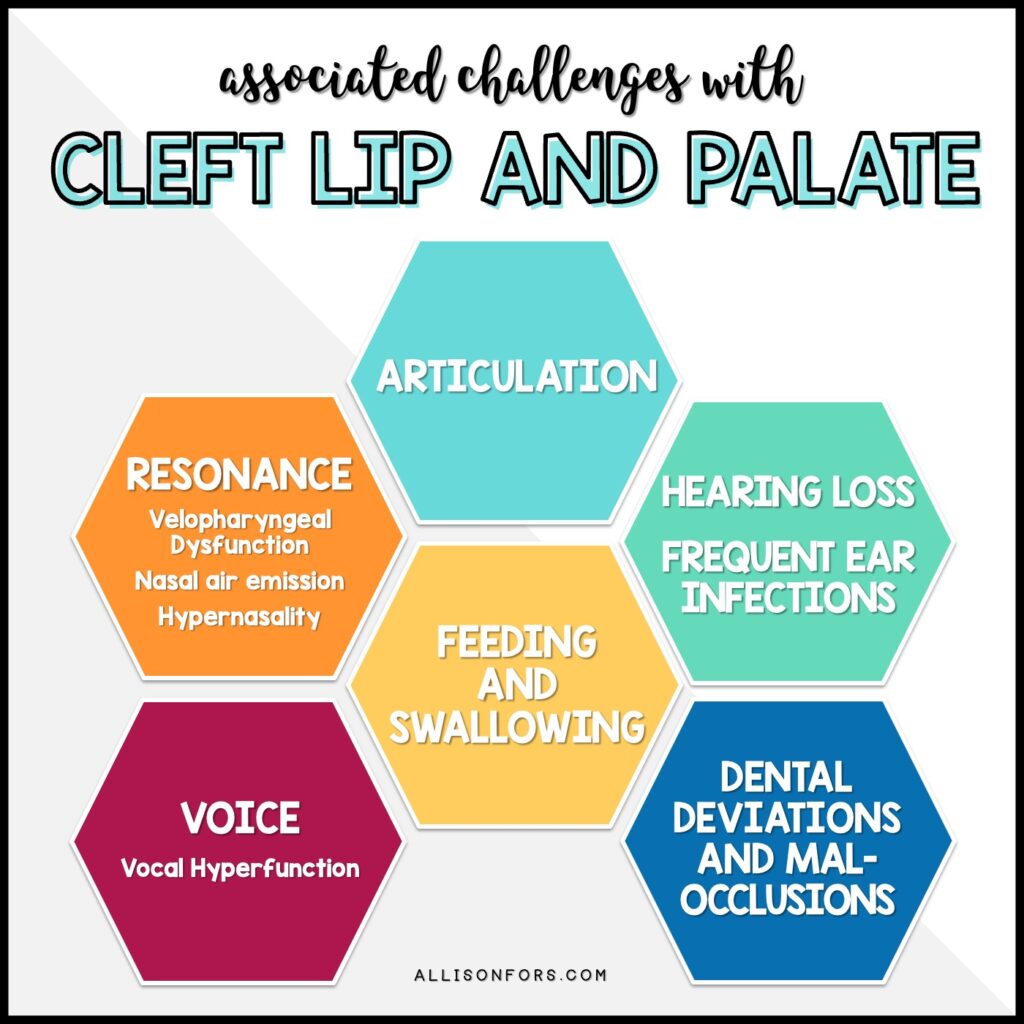
SLPs working with individuals who are cleft-affected should be familiar with both structural and functional aspects of speech. Common areas of concern include:
Velopharyngeal Dysfunction (VPD): This affects the ability to close the space between the soft palate and the pharynx during speech, often leading to hypernasality, nasal air emission, and reduced intraoral pressure, especially for pressure consonants (e.g., /p/, /b/, /t/, /k/).
Compensatory Articulations: In response to early structural differences, some children develop atypical speech patterns (e.g., glottal stops, pharyngeal fricatives) that require direct therapeutic intervention.
Hearing Loss and Otitis Media: Middle ear dysfunction is common, especially in children with cleft palate, and can negatively impact speech and language development.
Language and Literacy Risks: Some children with cleft palate may be at increased risk for expressive/receptive language delays and later literacy challenges.
This page is a compilation of information related to speech intervention in those with cleft lip ± palate. Discover research, ideas, websites, and resources! >> Cleft Speech Information Page
Signs and Symptoms of Submucous Cleft Palate
How to Help Speech Development Before Palate Repair
Questions to Ask When Evaluating a Cleft-Affected Child
The Cleft Palate Speech Guidebook is a comprehensive manual for evaluating and treating cleft speech, along with parent handouts. This unique cleft speech book has concise, easy-to-understand information for SLPs and SLPAs to assess and treat cleft-affected children. It contains over 100 pages of accessible information to feel confident in treating cleft speech!