

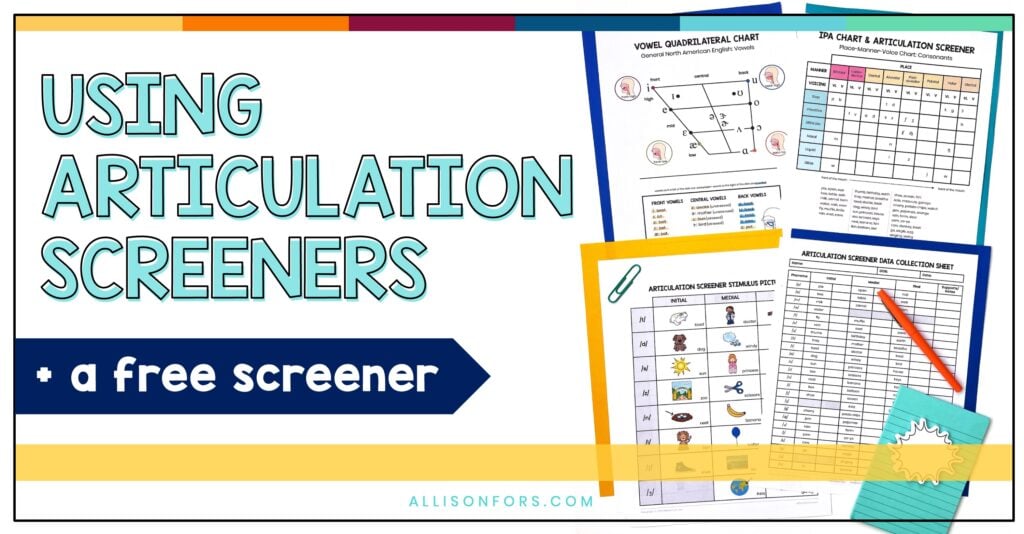
A guide to articulation screeners for school-based SLPs. Learn what articulation screeners are, how they differ from full assessments, and when to use them in speech therapy.
An articulation screener is a quick, informal tool used to get a snapshot of a student’s speech sound production. It is designed to help speech-language pathologists (SLPs) determine whether a student may have an articulation or phonological disorder and if further evaluation is warranted.
Screeners are typically brief and target a range of speech sounds in different word positions. They are not meant to provide detailed analysis or standardized scores. Instead, they serve as a first step in identifying potential areas of concern.
In school settings, articulation screeners are often used during Response to Intervention (RTI) processes, as part of a referral, or when a teacher or parent raises concerns about a child’s speech clarity.
Using a screener allows SLPs to make efficient, informed decisions without jumping straight into time-intensive evaluations. It helps prioritize students who need further assessment while providing documentation to support referrals.
Screeners are also a practical way to collaborate with teachers and support early identification, especially in busy school settings where time and resources are limited.
You might use an articulation screener when:
While articulation screeners and full assessments may look similar on the surface, they serve very different purposes.
An articulation screener is:
A full articulation assessment, on the other hand, is:
In other words, a screener helps answer the question: “Is there a concern?”
A full assessment answers: “What exactly is the problem, and does this student qualify for services?”

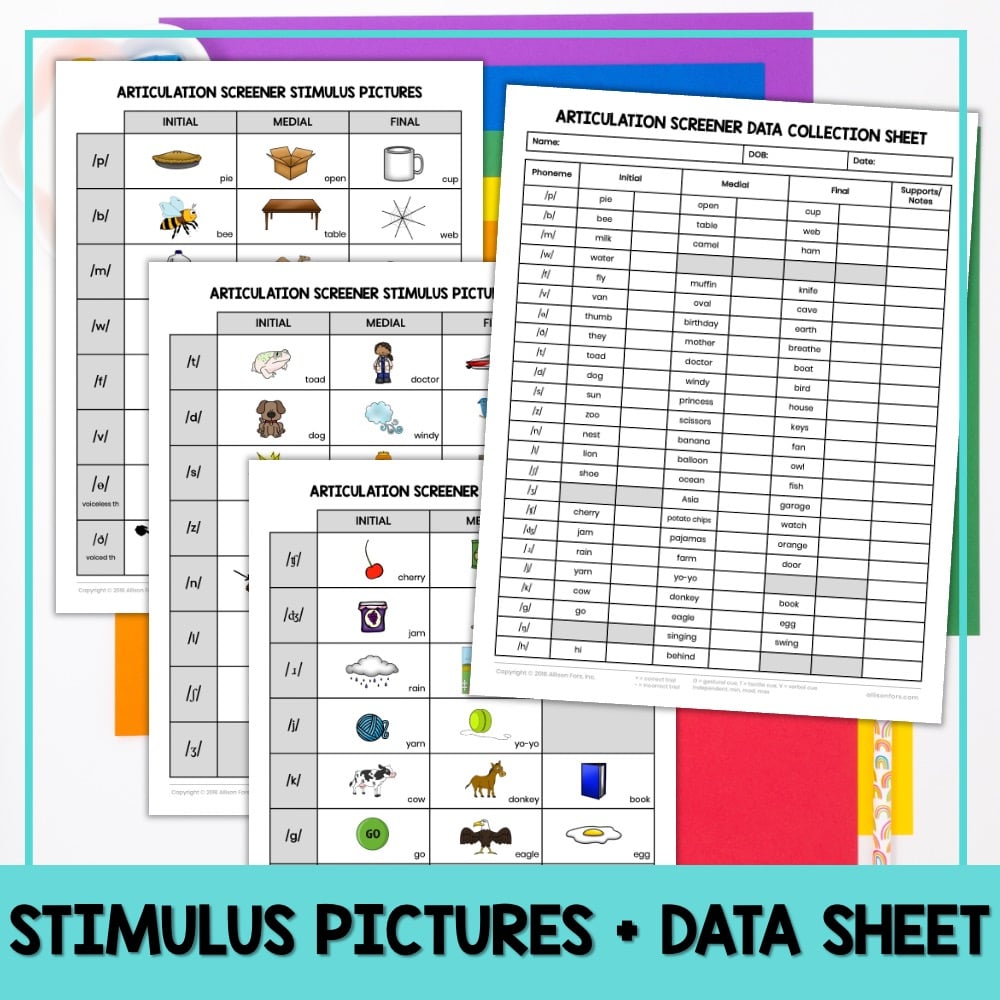
This speech tool is designed to be quick, easy to use, and helpful for identifying students who may need additional support. In addition, this is a great reference guide for place, manner, and voice of consonant sounds.
Use the fun stimulus pictures that correspond with the data collection sheet makes it easy to assess articulation. The IPA consonant chart and vowel quadrilateral chart make it easy to see error patterns.
What’s Included
How SLPs Use It
Incorporating articulation screeners into your speech therapy practice can streamline your workflow while supporting early identification of speech sound disorders. By understanding the difference between articulation screening and a full articulation assessment, SLPs can make informed, data-driven decisions about next steps. Whether you’re working in schools or clinics, using an articulation screener is an efficient way to monitor speech sound development and determine when further evaluation is needed.
You may be interested in reading: