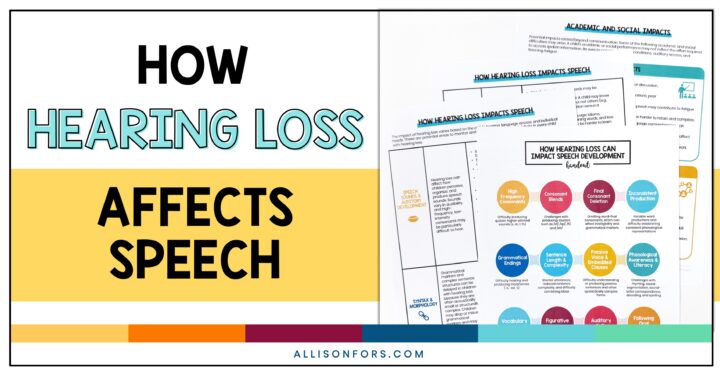
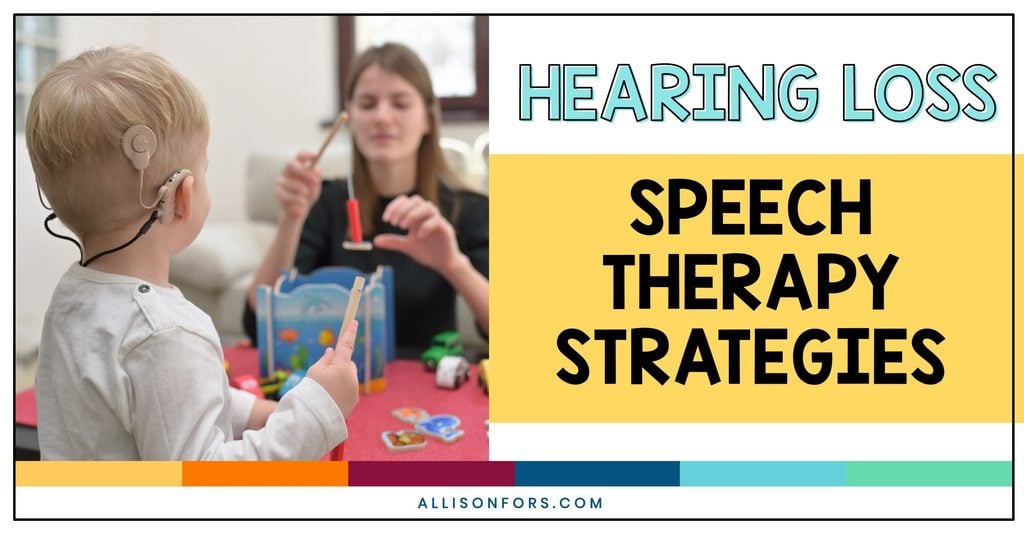
In my last post, I covered how hearing loss affects speech development: the quiet high-frequency sounds, the tiny grammatical markers, and the vocabulary kids miss when they can’t overhear conversations. The natural next question is what do I actually do about it in therapy?
The good news is that many of the most effective strategies for deaf and hard of hearing (DHH) students aren’t complicated. They’re small, intentional shifts in how you sit, speak, pause, and present information. Once they become habits, you’ll use them in nearly every session.
Below are practical speech therapy strategies for hearing loss, organized by what they help you accomplish.
These strategies support listening and spoken language development, but every DHH student is different. A child’s degree of hearing loss, hearing technology, communication modality, and family goals should shape which strategies you use and how. A child who uses sign language or a total communication approach may need visual support first, not last. Coordinate with the student’s audiologist, teacher of the deaf, and family so everyone is working from the same plan.
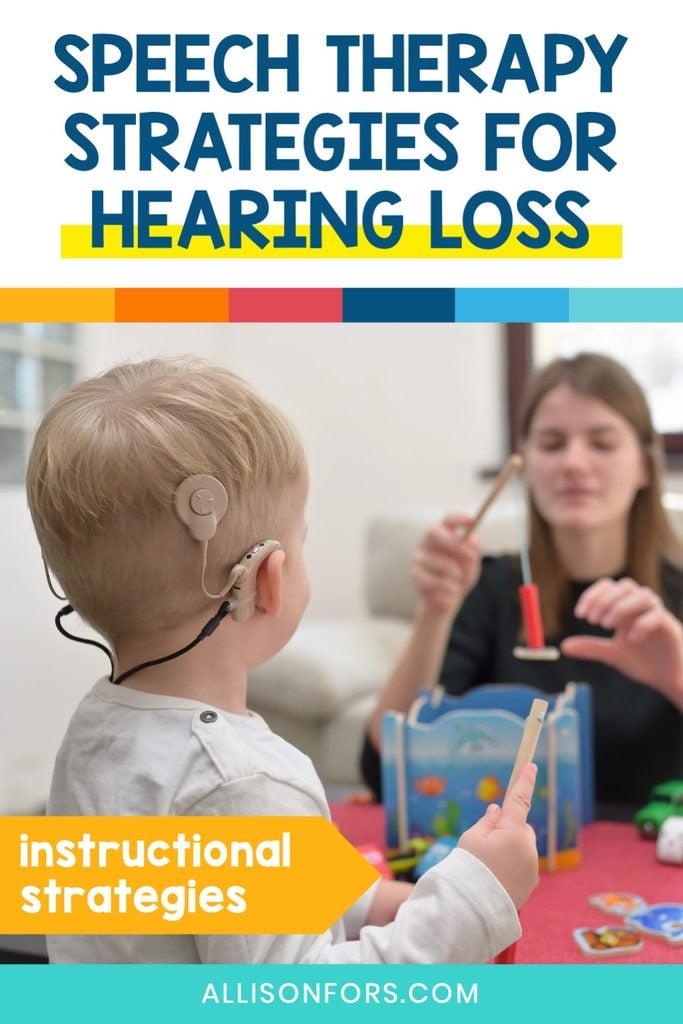
Positioning matters more than most of us realize. Hearing aids and cochlear implants pick up sound best when the speaker is close to the microphone, so sit near the student, ideally at eye level and on the side of their better ear. Face them, and speak at a natural, clear pace. It’s easy to talk while looking down at materials or reaching for the next card, but that small habit can cost a child a lot of information.
Auditory attention comes next. Check that hearing technology is on and working, reduce background noise where you can, and get the child’s attention before you speak. Give them a moment to orient to you.
Before you start a game, close the door, turn off the fan, and wait until the child is looking at you before giving the first direction.
When a child struggles, our instinct is to jump in quickly with a prompt. Sometimes that’s exactly right. But if we always lead with visuals, we may be teaching the child that listening is optional.
Auditory-first presentation means saying the message before adding visual or gestural support, when that fits the child’s skills and access. Wait time gives them a few seconds to process before you repeat or rephrase. Many DHH students need longer processing time than we instinctively give.
The auditory sandwich puts these together. Say it, add support if needed, then say it again without the support. That final repetition ties the message back to listening. For example, say, “Find the one with stripes.” Wait. If the child needs help, point to the zebra, then repeat, “The one with stripes,” without pointing.
Acoustically small sounds and grammatical markers (plural -s, past tense -ed, third-person -s, and possessive -‘s) are easy to miss. Children may omit or misuse them.
Acoustic highlighting uses vocal stress, pitch, length, or a brief pause to make a target sound, word, or ending more noticeable, while keeping it inside meaningful language. Auditory bombardment gives the child many natural exposures to a target before you ask them to produce it. Repetition across contexts brings a word or structure back in different activities and sentence frames, so the child learns it flexibly rather than in one fixed phrase.
Working on past tense -ed? During a pretend kitchen activity, highlight it naturally: “I washed… the plate. You dried… the cup. We cleaned… everything!”
Listening skills develop in a rough progression, and your activities can follow it.
Hearing children pick up an enormous amount of language incidentally. DHH students often don’t get those repeated exposures, so we can’t assume a word or grammatical form will “click” on its own.
Explicit instruction means directly teaching vocabulary, concepts, and grammar: the rule, examples, and plenty of practice. Visual and multimodal support pairs spoken language with written words, sign, gestures, or models, so the child has more than one route to meaning. For example, when teaching above and below, act it out with real objects, label each position, and write the words on sticky notes as you go.
Here’s one that’s easy to miss: a child who repeats your direction, or nods along, hasn’t necessarily understood it. Many DHH students become skilled at looking like they’re following along.
Comprehension checks verify understanding instead of assuming it. Ask the child to tell you or show you what they’ll do. If they can’t, break the message into shorter, simpler parts.
Communication repair and self-advocacy teach the child to notice when they’ve missed something and do something about it. That includes asking for repetition, asking what a word means, or telling a speaker that it’s too noisy. These skills carry well beyond the therapy room, into classrooms, friendships, and eventually work. Instead of “Do you understand?”, which almost always gets a yes, ask, “What’s the first thing you’ll do?”
Tip: You don’t need to use all of these strategies at once. Pick two or three that fit your student’s current goals, build them into your routines, and add more as they become second nature. Share the environmental and comprehension-check strategies with classroom teachers too, since that’s where these students spend most of their listening day.
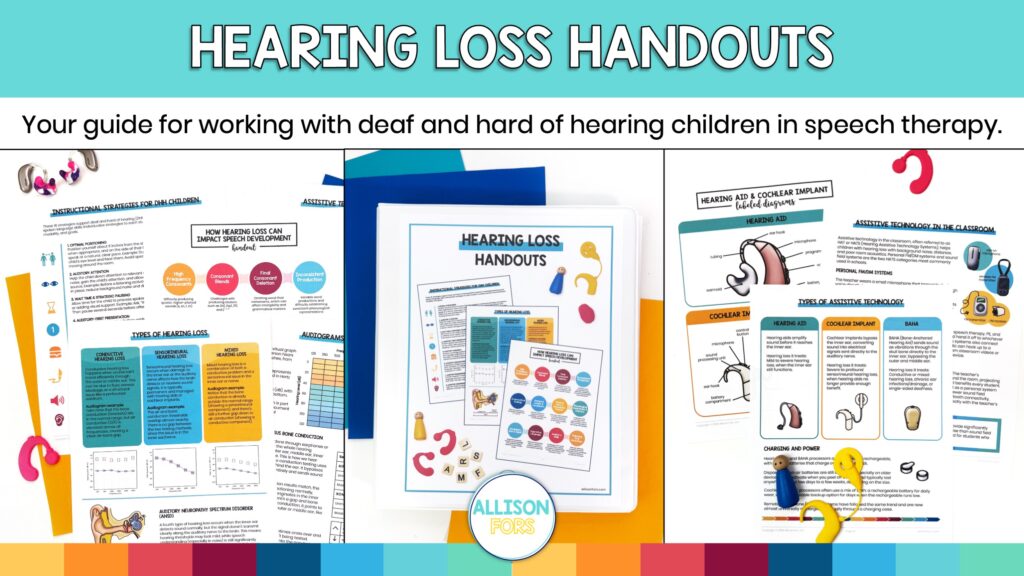
The Hearing Loss Handouts will help you feel confident supporting deaf and hard of hearing students in speech therapy. This guidebook gives SLPs and SLPAs concise, easy-to-understand information on hearing loss, plus strategies you can use in your sessions right away.
This guidebook is a collection of 33 handouts and information pages for speech therapists working with deaf and hard of hearing students. It includes a 2-page list of 16 practical strategies!
You may also be interested in reading: