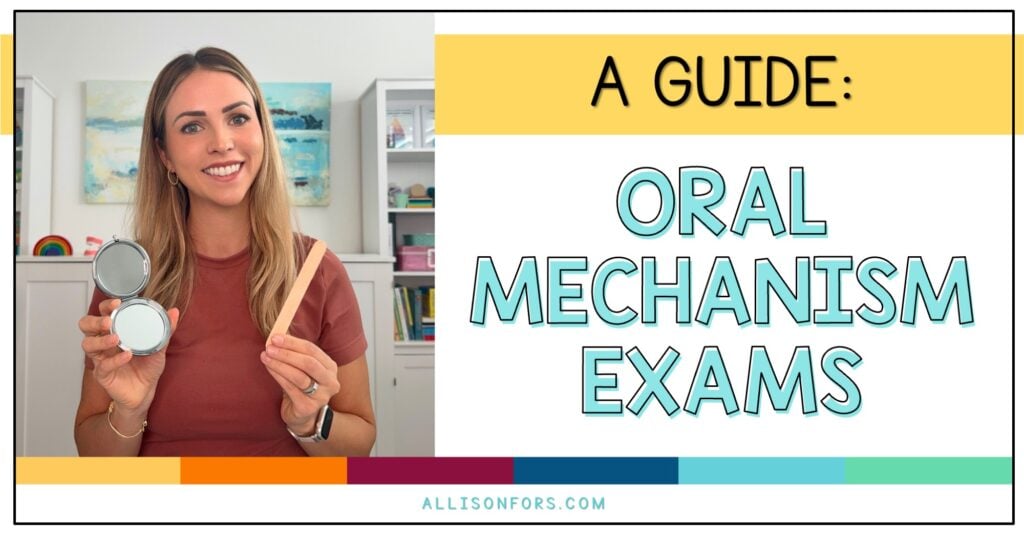
An oral mechanism exam provides critical information about the anatomy and movement of the speech system. It helps speech therapists determine whether speech differences may be related to structural differences, weakness, coordination issues, or other physical factors affecting speech production.
Understanding how and when to complete an oral mechanism exam is essential!
An oral mechanism exam is a structured assessment of the oral structures and their function. During the exam, the clinician observes and evaluates parts of the speech mechanism, including:
The exam typically includes two components:
1. Structural Assessment
The clinician observes the anatomy at rest. This helps identify structural differences that may impact speech. Examples include:
2. Functional Assessment
The clinician evaluates how the structures move during speech-related tasks. These tasks help assess strength, coordination, range of motion, and symmetry of the speech structures. For example:
Oral mechanism exams play a critical role in accurate diagnosis and treatment planning. They help us identify structural differences, support differential diagnoses, guide referrals, and establish baseline information.
Speech errors are not always purely phonological. Some errors may stem from structural factors such as velopharyngeal insufficiency, submucous cleft palate, dental malocclusion, or tongue restrictions. Without examining the structures, these factors can easily be missed.
An oral exam helps clinicians determine whether speech patterns are more consistent with an articulation disorder, phonological disorder, motor speech disorder, or resonance disorder.
For example, limited tongue movement may suggest a structural or motor component rather than a phonological process.
Oral mechanism findings sometimes indicate the need for referral to other professionals such as:
The oral exam provides baseline documentation of structure and function. This information can be helpful when monitoring changes over time or after medical interventions.
Oral mechanism exams are commonly completed as part of a comprehensive speech evaluation. Any full speech assessment should include at least a brief oral mechanism screening.
However, there are several situations where they are particularly important, and they should not be overlooked:
Certain speech characteristics may warrant a closer look at the oral structures. Examples include:
Children with certain medical histories may require a more thorough exam. This includes:
If a child is not making expected progress in speech therapy, re-examining the oral structures can sometimes reveal factors that were previously overlooked.

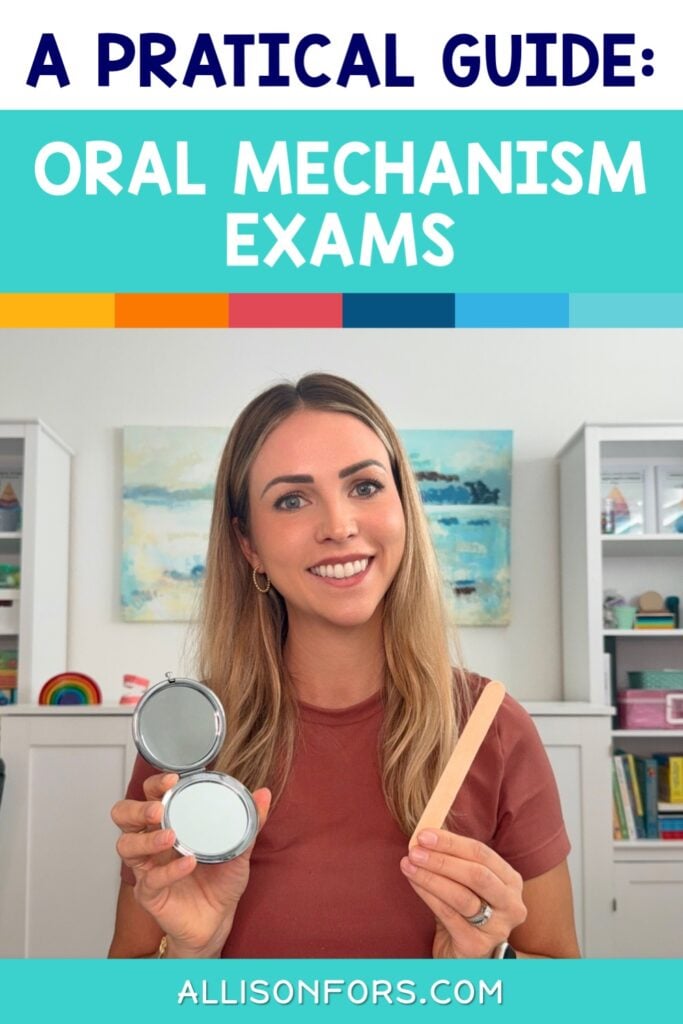
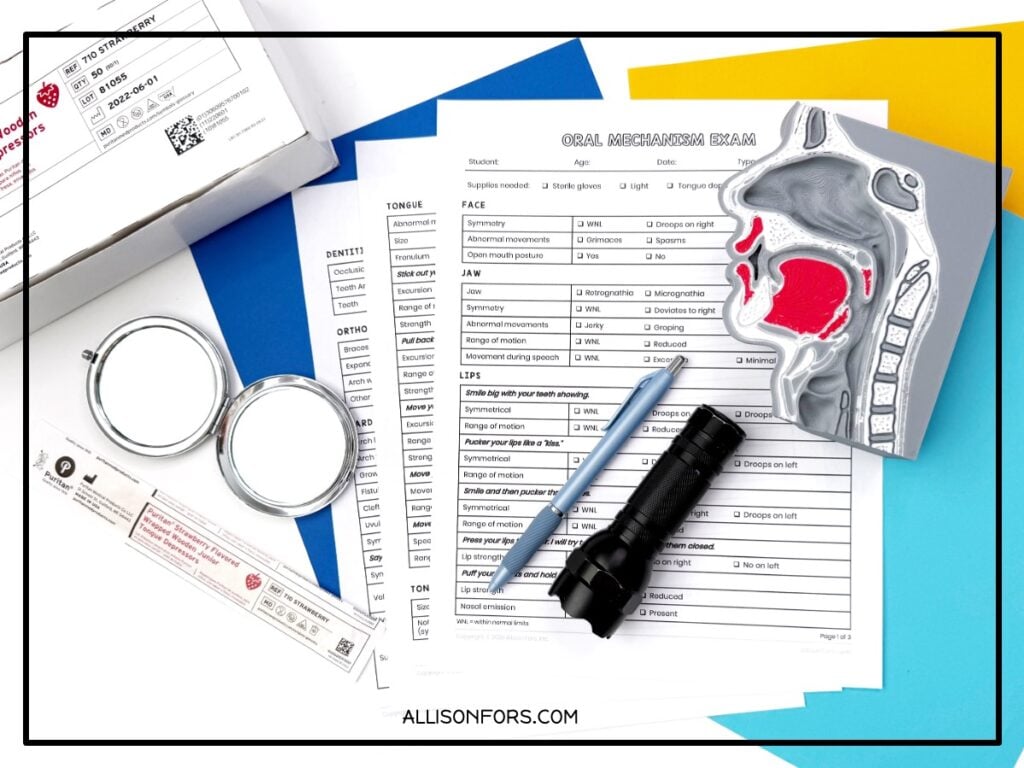
Fortunately, oral mechanism exams require minimal equipment.
Most clinicians use:
You may also use nasal mirrors or straws during airflow tasks when assessing resonance concerns.
Young children may be more cooperative when tasks are framed playfully. Play-based prompts often lead to better participation. For example: “Show me your biggest smile!”, “Can you stick your tongue out like a silly snake?” or “Let’s roar like a lion: ahhhh!” You can also use visual cue cards with animals or other fun pictures.
Not everything needs to happen during isolated tasks. Many structural or functional differences can be observed during conversation, sound production, and spontaneous speech. Watching the palate during sustained “ah” or listening for nasal emission during speech can provide valuable information.
Many important findings relate to asymmetry. Asymmetry can signal nerve involvement or structural differences. Notice whether the tongue deviates to one side, the palate lifts evenly, and lip movements are symmetrical.
If you notice structural concerns, such as a suspected submucous cleft, limited velar elevation, or significant tongue restriction, it may be appropriate to refer to medical specialists for further evaluation.

Oral mechanism exams are a fundamental component of speech-language assessment. By examining the structures and movements involved in speech, clinicians gain valuable insight into the underlying factors that may be affecting speech production.
Even a brief oral mechanism screening can provide information that influences diagnosis, treatment planning, and referrals. With practice, oral exams become a quick and natural part of the evaluation process—and an essential tool for providing comprehensive care.
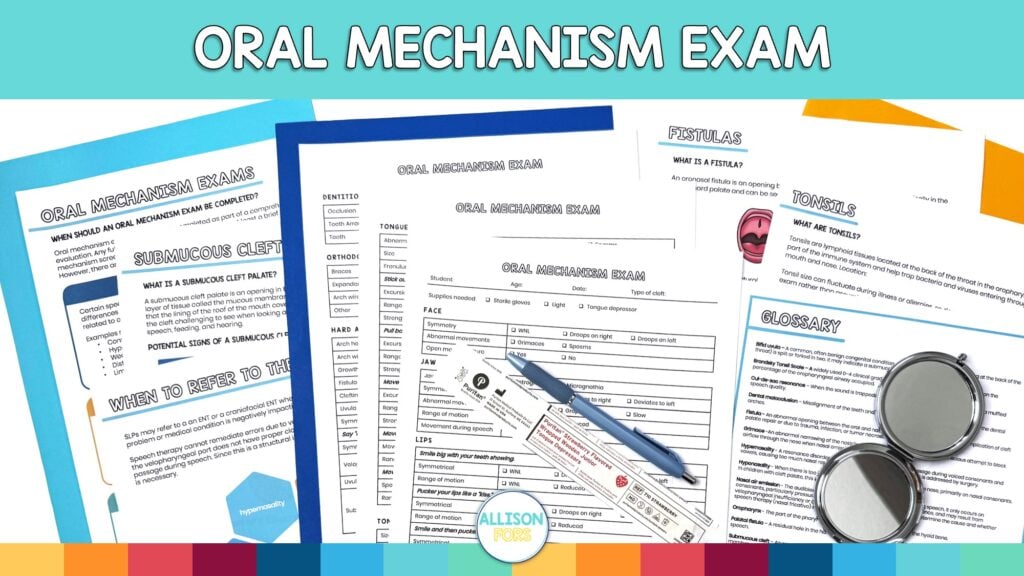
This unique resource walks you through how to complete an oral mechanism examination step-by-step, with an organized exam form, visual picture cue cards, and reference pages explaining common structural differences such as submucous cleft palate, tonsils, and fistulas.
The Cleft Palate Speech Guidebook is a comprehensive manual for evaluating and treating cleft speech. This unique cleft speech book has concise, easy-to-understand information for SLPs and SLPAs to assess cleft speech. In addition, how to treat articulation and compensatory errors. It contains over 100 pages of accessible information to feel confident in treating cleft speech!

You may be interested in reading: